American Mahjong Tiles Explained: All 152 Tiles, With Pictures
An American Mahjong set has 152 tiles: 108 suit tiles (bams, cracks and dots, numbered 1 to 9, four of each), 16 winds, 12 dragons, 8 flowers and 8 jokers. The jokers are what make an American set different: a typical Chinese set has the same 144 other tiles and no jokers.
Here is every tile, with a picture, so you can sort a new set or check a tile you don't recognize.
The tile count at a glance
| Tile family | Tiles in the family | Copies of each | Total |
|---|---|---|---|
| Bams (bamboo) | 1 to 9 | 4 | 36 |
| Cracks (characters) | 1 to 9 | 4 | 36 |
| Dots (circles) | 1 to 9 | 4 | 36 |
| Winds | North, East, West, South | 4 | 16 |
| Dragons | Green, Red, White (Soap) | 4 | 12 |
| Flowers | 8 different pictures | 1 | 8 |
| Jokers | Joker | 8 | 8 |
| Total | 152 |
Many sets come with a few spare jokers or blank tiles. Put them away before you play, so the count stays at 152.
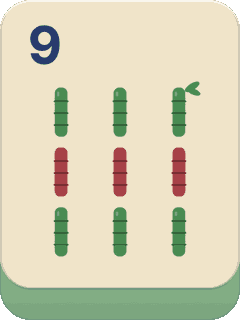
Bams
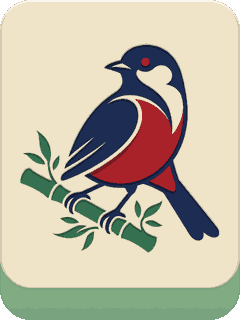
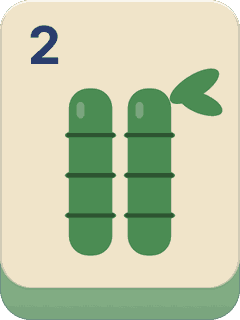
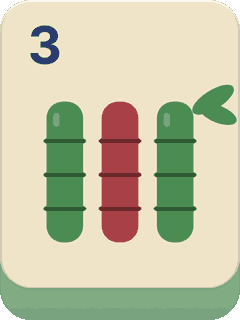
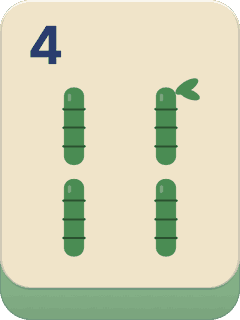
Bams show sticks of bamboo. The 1 bam is the odd one out: it usually shows a bird instead of a stick.
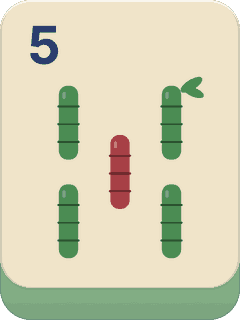
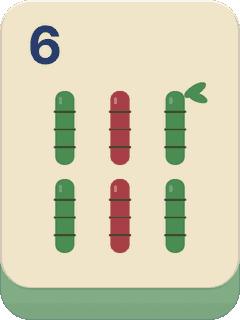
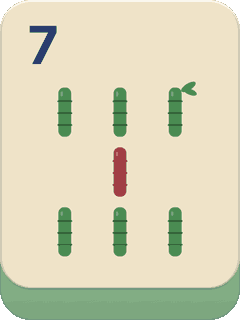
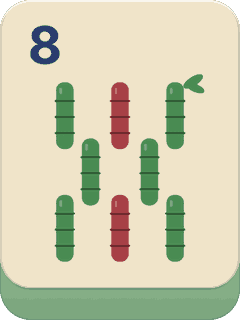
Cracks
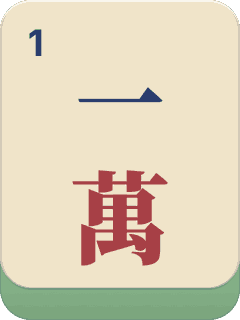
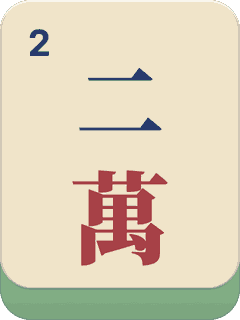
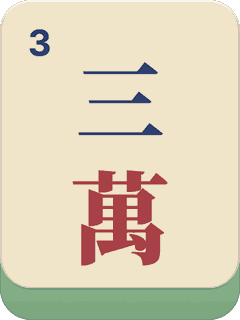
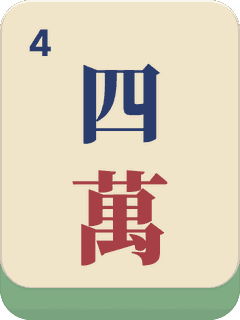
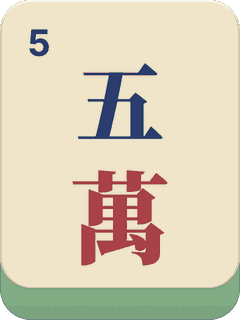
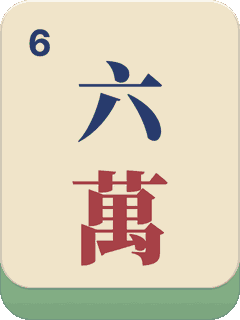
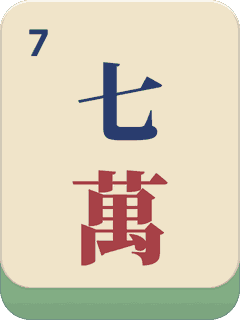
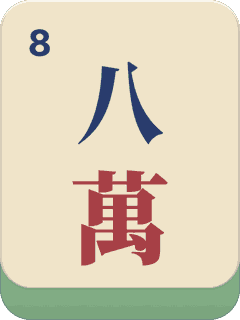
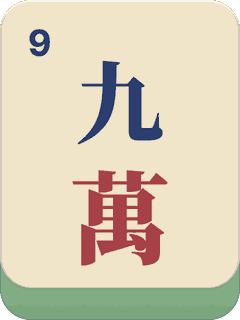
Cracks (short for characters) show a Chinese character, with a number in the corner on American sets.
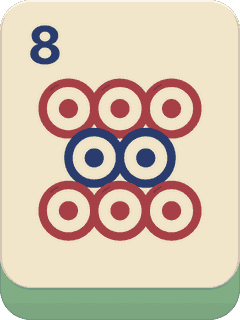
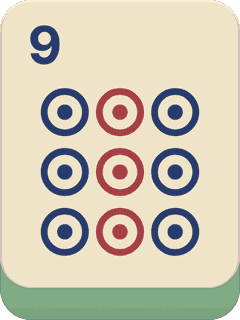
Dots
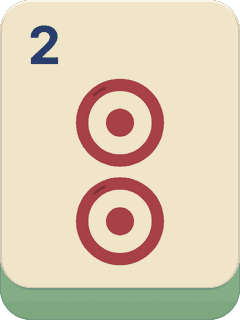
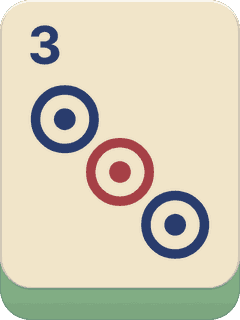
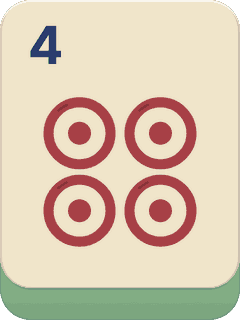
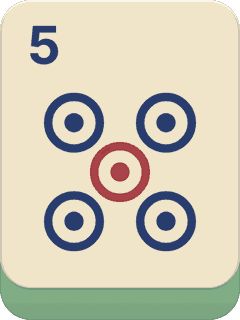
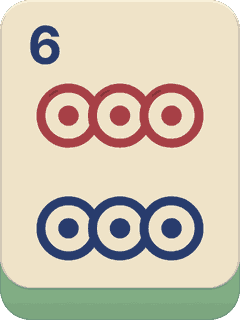
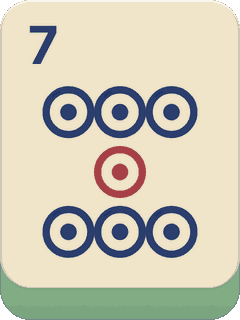
Dots show circles. Count the circles to get the number.

Winds
There are four winds, marked N, E, W and S on American sets. The winds don't belong to a suit.




Dragons
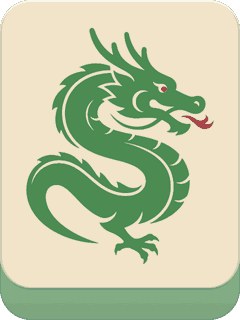
There are three dragons, and each one is linked to a suit. The card relies on this link, so it is worth learning early.


| Dragon | Goes with | Also called |
|---|---|---|
| Green dragon | Bams | Green |
| Red dragon | Cracks | Red |
| White dragon | Dots | Soap. On the card it also stands for zero, as in the year |
Flowers
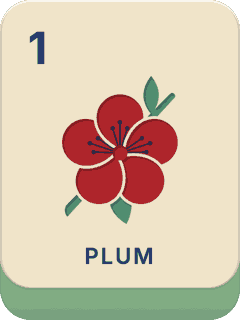
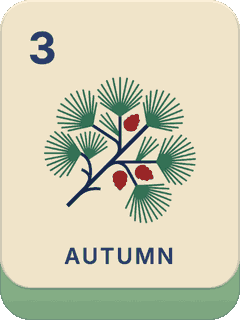
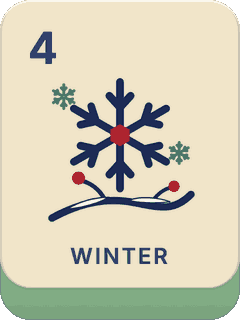
A set has eight flowers. Some show flowers and some show seasons, but in American Mahjong all flowers are the same tile. Any flower matches any other flower, so three different flower pictures still make a group of three flowers.
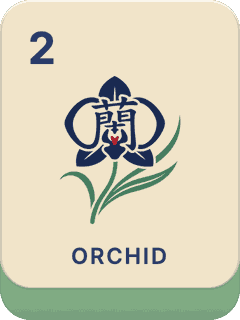
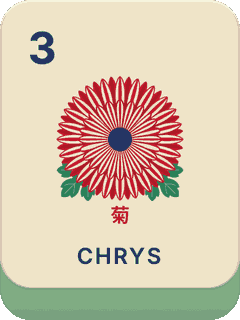
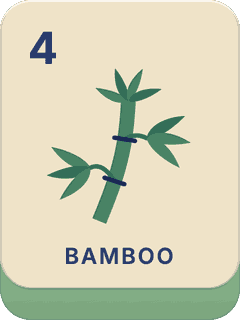
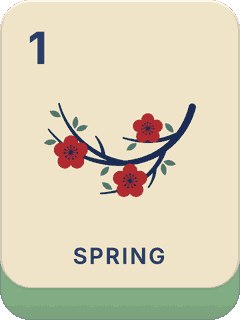

Jokers
There are eight jokers. A joker can stand in for any tile in a group of three or more matching tiles. It can never be used as a single tile or in a pair, and it can never be passed in the Charleston. (All the joker rules.)

How to tell tiles apart quickly
- Look at the corner number first. American tiles print the number, or N, E, W, S, in a corner.
- Don't confuse the 1 bam with a flower. The 1 bam has a number in the corner. A flower does not.
- The Soap is not a blank tile. It usually has a frame or border. A true blank is a spare.
- Flowers only have to be flowers. You never need a matching picture.
Which tiles decide a hand
Some first-hand numbers, from the move logs of our daily game, where everyone plays the same deal against the same computer players:
- The joker exchange wins hands. In our games 25% of winning hands took a joker out of an exposure on the table by trading in the real tile, a move many beginners don't know exists. (How the joker exchange works.)
- A joker thrown early is usually a joker wasted. In our games a joker was discarded in 15% of hands. A joker fits almost every line on the card, so early in a hand keep it unless you are playing singles and pairs. Late in a hand, when you are defending, a joker is the one discard nobody can call.
- Suit tiles win. 95% of winning hands came from the number sections of the card (consecutive runs, the even numbers, the odd numbers and like numbers). Winds, dragons and flowers mostly win as the small groups inside those hands, not as hands of their own.
- A winning hand needs about 15 draws. That is the median number of tiles a winner drew from the wall. Count the copies of a tile you can still see: there are four of each suit tile, so a tile that has been discarded three times has one left. You can no longer pair it, but jokers can still make it a pung.
Our numbers come from our players' official, server-verified Daily games, as of October 22, 2026. Only aggregate counts are published; no player is identified.
Sorting your rack
Most players sort their 13 tiles by suit, then by number, with winds, dragons, flowers and jokers at one end. It makes it easier to see which hand on the card you are closest to. Keep the sorting to yourself, though: some players rearrange their tiles now and then so others can't read their hand.
See the tiles in a real hand
Knowing the tiles is step one. Our beginner's guide to playing shows what you do with them, and the free daily hand lets you play with them today.
Frequently asked questions
- How many tiles are in an American Mahjong set?
- 152: 36 bams, 36 cracks, 36 dots, 16 winds, 12 dragons, 8 flowers and 8 jokers.
- What is the Soap tile in mahjong?
- The Soap is the white dragon. It goes with the dots suit, and on the American Mahjong card it also stands for zero, for example in hands built on the year.
- Are all flower tiles the same in American Mahjong?
- Yes. All eight flowers are interchangeable. A flower with a plum and a flower with a season picture count as the same tile.
- Which dragon goes with which suit?
- The green dragon goes with bams, the red dragon with cracks, and the white dragon (Soap) with dots.
- How many jokers are in American Mahjong?
- Eight. Sets often include spares, but a game uses eight.
- Should I ever discard a joker?
- Rarely, and not early. In our daily games a joker was thrown away in 15% of hands. Early in a hand it is usually wrong: a joker stands in for any tile in a group of three or more, so it fits most lines on the card. Late in a hand, when you are defending, a thrown joker is the one discard nobody can call, so it is the safe play. A singles and pairs hand cannot use jokers at all.
- Which tiles should a beginner keep in the Charleston?
- Keep jokers (you cannot pass them anyway), flowers, and any number you hold two or more of. Pass lone winds and dragons first, then single numbers that fit nothing you are building.
No signup needed. New to the game? Start with June’s free lessons.