How to Read the 2026 National Mah Jongg League Card
The card is a menu of winning hands. Every line is one complete 14-tile hand, the numbers are the tile values you need, and the color of a number tells you its suit: same color, same suit; different color, different suit. Read a line group by group, left to right, and the number at the far right is what the hand pays.
That is the whole trick. The rest of this guide spells it out line by line, then shows you, from our own daily games, which parts of the card players actually win with and where they go wrong.
The card is a menu of winning hands
Every line on the card is one complete winning hand. To win a game, your fourteen tiles have to match one line exactly. That is the whole job: pick a line, then build toward it.
The card groups those lines into sections by theme. You will see families like consecutive runs, like numbers, the even numbers (2468), the odd numbers (13579), winds and dragons, the 369 hands, and singles and pairs. You do not need to memorize them. You just need to be able to scan them.
A line, read tile by tile
Say a line calls for the year 2026 in a single suit. Spelled out in tiles, the year looks like this:
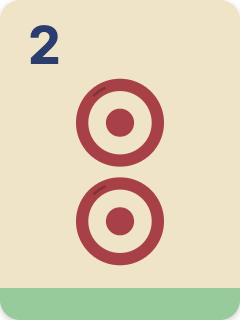

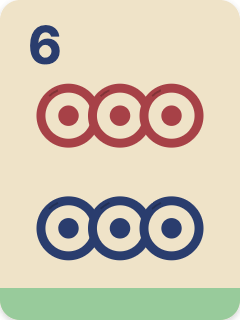
That is a 2, the Soap (the white dragon, which plays as zero), another 2, and a 6, all in one suit. Reading the card is just doing that for every group on the line.
What the numbers and colors mean
The numbers on a line are the tile values you need. The color of a number tells you its suit.
- Numbers in the same color belong to the same suit.
- Numbers in a different color belong to a different suit.
The card does not tell you which specific suit to use. You choose. If a hand shows two colors, you just need two different suits among bams, cracks, and dots. That flexibility is what makes one line playable so many ways. This colors-mean-suits idea is the single biggest thing that confuses beginners, so it is worth saying plainly: count the colors, not the pictures.
The three suits and their dragons
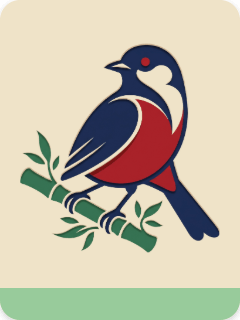
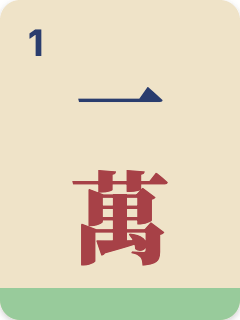

Each suit has a matching dragon, and the card uses the dragon's color to stand for that suit:
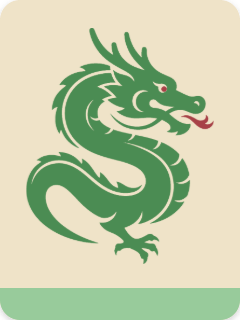

Green dragon goes with bams, red with cracks, and the Soap (white dragon) with dots. The Soap does double duty: it is also the zero you saw in 2026.
The symbol legend
Here is every mark you will meet on a line, in one place:
| Symbol | What it means | Example |
|---|---|---|
| Color of a number | The suit (you pick which) | Two colors on a line means two suits |
| F | A flower tile | Any of the eight flowers |
| D | A dragon, matching its suit's color | Green with bams, red with cracks |
| 0 | The Soap (white dragon), used as zero | The 0 in 2026 |
| N E W S | The wind tiles | North, East, West, South |
| C | The hand must be concealed | You build it in your rack, no exposing |
A C next to a hand means it must be played concealed: you build it in your own rack rather than claiming tiles to expose them. Hands without that mark can usually be made with exposures, where you claim a discard to complete a group out in the open.
The number on the right is the points
At the end of each line is a value, often 25 and up. That is what the hand is worth if you win with it. Harder hands pay more. When you are learning, do not chase the big numbers. Chase the hand your tiles are actually close to. A 25-point hand you complete beats a 50-point hand you never finish.
How to pick a hand at the start
- Look at your starting tiles and notice what you already have a few of.
- Scan the card for a line that fits those tiles.
- Pick one or two candidate hands, not five. Flexibility is good early, but commitment wins games.
- Let the Charleston, the tile-passing round, push you toward your pick.
That is it. The card stops being a code and becomes what it really is: a menu.
Which sections players actually win with
The card has nine sections, and they do not get used equally. In our daily game, every player gets the same deal and plays a full hand against the same computer players, so we can count which section the winning hand came from. Here is the count so far, every section included.
| Card section | Winning hands | Share of wins |
|---|---|---|
| Consecutive runs | 44 | 57% |
| The 2468 even numbers | 18 | 23% |
| Like numbers | 8 | 10% |
| The 13579 odd numbers | 3 | 4% |
| Winds and dragons | 2 | 3% |
| The year hands | 1 | 1% |
| Singles and pairs | 1 | 1% |
| The 369 hands | 0 | 0% |
| Quints | 0 | 0% |
Our numbers come from our players' official, server-verified Daily games, as of October 22, 2026. Only aggregate counts are published; no player is identified.
Read it as a beginner's shortlist, not a rule. Consecutive runs and the even numbers win most for the same reason they are easy to read: the numbers run in order, and almost any starting rack has a few of them. The 13579 odd numbers, winds and dragons, the year hands and singles and pairs win rarely, and the 369 hands and quints have not won at all yet, because they need specific tiles (or no jokers at all) and the deal has to cooperate. When you are learning, scan consecutive runs (57%) and the 2468 even numbers (23%) first. If nothing fits, then look further down the card.
How long it takes to make a hand
In our daily games, the hands that go Mahjong do it after a median of 15 tiles drawn from the wall (the middle half take 12 to 19). Hands that never get there run longer, about 21.5 draws on average, because the player keeps drawing until the wall runs out or someone else wins. About 36% of players make Mahjong at all; the rest lose to a computer player, hit a wall game or go dead. The share swings a lot from one day's deal to the next.
Two more counts from the same games. 62% of the hands that won were 25-point hands, which is about the share of 25-point lines on the card. 52% of winning hands called at least one tile to expose a group, and 62% of wins came on a called discard rather than a self-draw.
The mistakes we see most
The same few slips show up in game after game. The numbers come from the move logs of our daily games; the rest comes from what players write to ask us.
- Throwing a joker away early. In our games a joker was discarded in 15% of hands. Early in a hand it is usually wrong: a joker fills any group of three or more, so it is the one tile that fits nearly every line on the card. Late in a hand, when you are defending, a joker is the one discard nobody can call. Keep it unless your hand is singles and pairs, which cannot use jokers.
- Stopping the second Charleston too early. In our games 82% of players voted to go on to the second Charleston. If you can name three tiles you would happily lose, keep passing.
- Misreading the colors. When players ask us why a hand was not Mahjong, the usual answer so far has been a joker standing in for a single or a pair, which it can never do. The other is the colors: two groups were in the same suit when the line showed them in different colors, or the other way round.
- Chasing points. A 50-point line looks tempting until you count how many exact tiles it needs. Pick the line your rack is already close to.
Practice reading it for real
The fastest way to get comfortable with the card is to use it on a live hand, where the choices actually matter. Our free daily deal gives you one fresh hand a day, the same one everyone else is playing, with the hands you are closest to shown as you go. When you want it explained out loud, June's free lessons walk the card section by section.
Frequently asked questions
- Do I have to memorize the NMJL card?
- No. The card is meant to sit in front of you while you play, like a menu. The skill is reading it and choosing a hand, not memorizing it. Most folks learn the sections by sight over a few games.
- What does the C next to a hand mean?
- C means the hand must be concealed: you build it entirely in your own rack and cannot claim discards to expose tiles. Hands without a C can usually be made with exposures.
- Why does the card use colors instead of naming the suits?
- Colors keep each line flexible. The color tells you how many different suits you need and which numbers share a suit, but you choose which actual suits (bams, cracks, or dots) to use.
- What is the 0 or the Soap?
- The Soap is the white dragon, and on the card it is used as a zero, most famously in the year hands like 2026. It is the same tile that serves as the dot suit dragon.
- How often does the card change?
- The National Mah Jongg League releases a new card every year, usually in spring. The hands change, so a card is only good for its year.
- Which section of the card is easiest for a beginner?
- In our daily games the winning hands come most often from consecutive runs (57%) and the 2468 even numbers (23%). Those lines read in order and fit a lot of starting racks. Start by scanning them, then look further down the card if nothing fits.
- Why was my hand not Mahjong when it matched the line?
- Often a joker. A joker can never stand in for a single tile or one of a pair, so a hand that needs the real tile there is one tile short. The other common reasons are the colors (numbers in the same color must be in the same suit, and numbers in different colors must be in different suits) and a hand marked C that was played with exposures.
- Can I practice reading the card without a set?
- Yes. The free daily deal shows the hands your tiles are closest to as you play, and checks any hand you call. Play the same deal as everyone else, then compare your result.
No signup needed. New to the game? Start with June’s free lessons.